
52nd Tay Tien Regiment


52nd Tay Tien Regiment
Địa chỉ: Tay Tien Street, Sub-region 12, Moc Chau, Son La
Introduce
The National Historical Site – Memorial of the 52nd Tây Tiến Regiment sits on a beautiful landscape with a unique architectural design. The site is considered a “Red Address” for educating visitors on national history and revolutionary traditions. It is also a meaningful “Return to the Roots” destination for many generations of Vietnamese people as well as travelers from near and far when visiting the Mộc Châu Plateau in Sơn La Province.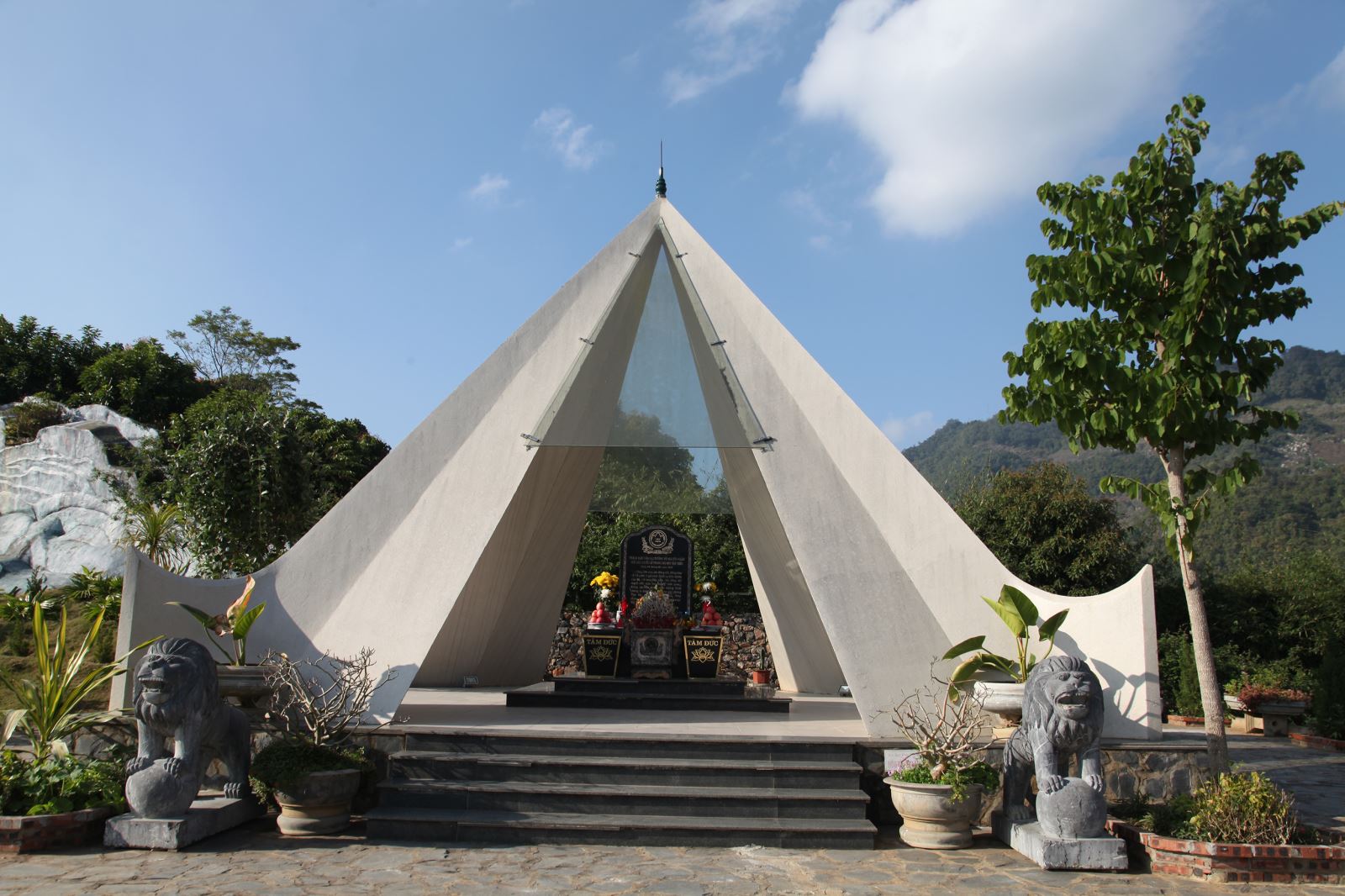
The Memorial Stele House
According to Ms. Lò Thị Muốn, the guide at the National Historical Site – Memorial of the 52nd Tây Tiến Regiment, the 52nd Tây Tiến Regiment was established in 1947 with the mission of coordinating with the Lao army to safeguard Vietnam’s border regions. Most soldiers of the Tây Tiến Regiment were young students from Hanoi. When the nation was invaded, they left their pens and school desks behind and voluntarily enlisted to join the battlefield.
The regiment operated across a wide mountainous area—including Hòa Bình, Sơn La, Lai Châu, and Thanh Hóa—where conditions were extremely harsh and lacking. In June 1949, the 52nd Tây Tiến Regiment was renamed the 12th Regiment under Inter-Region III. In 1951, when Division 320 was founded, Tây Tiến became one of the division’s three regiments.
During the resistance war against the French, the Tây Tiến Regiment overcame severe terrain and combat hardships, achieving many remarkable victories. The regiment was honored with the flag “Determined to Fight, Determined to Win” by President Hồ Chí Minh and granted the traditional name Đông Biên. It was also awarded 8 Military Merit Orders and 218 medals of various types.
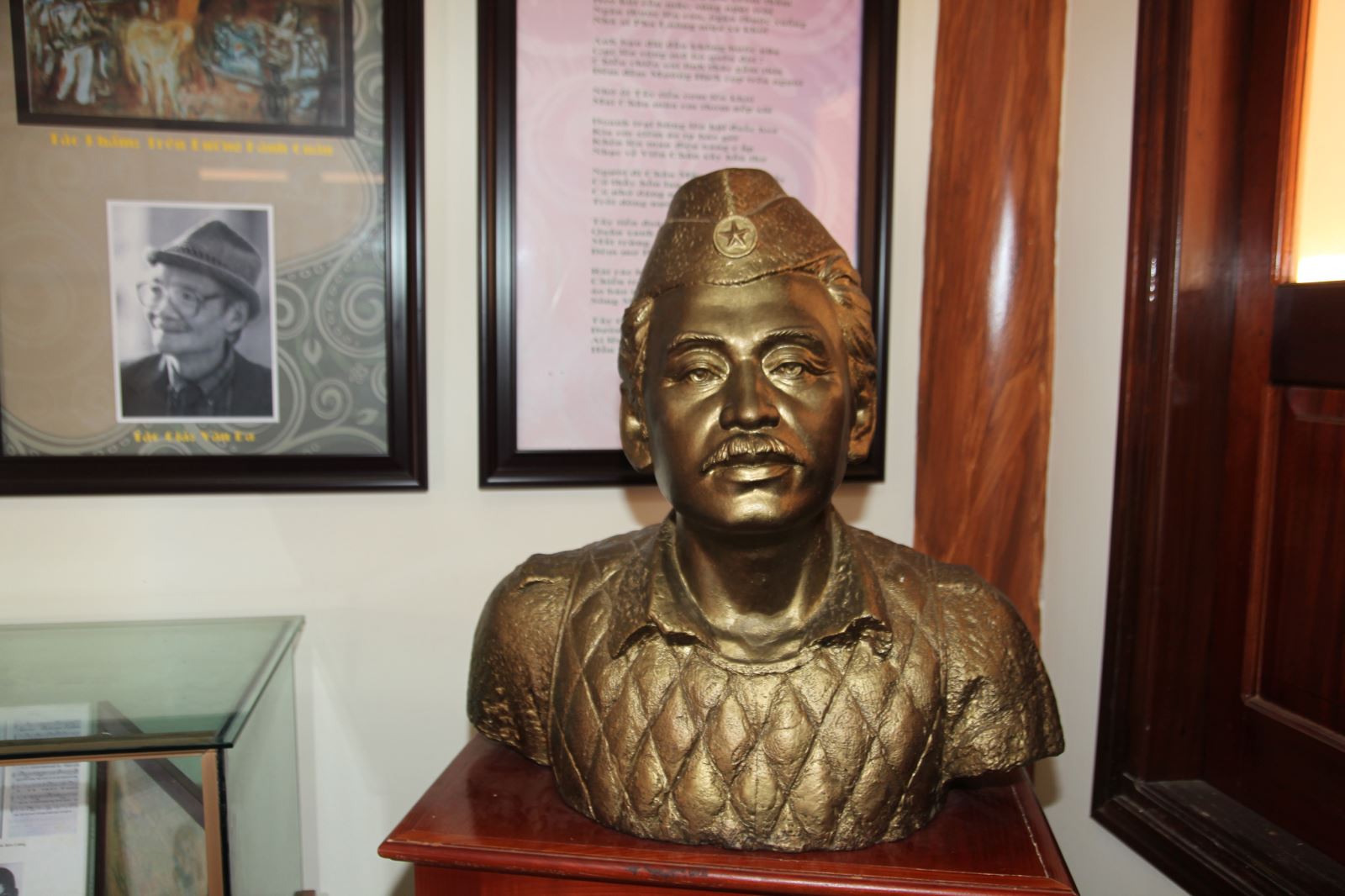
Bust Statue of Poet Quang Dũng
Built in 2006 on Na Bó Hill, Sub-zone 12 of Mộc Châu Town, and renovated in March 2015, the National Historical Site – Memorial of the 52nd Tây Tiến Regiment was recognized as a national historical site by the Ministry of Culture, Sports and Tourism in 2016.
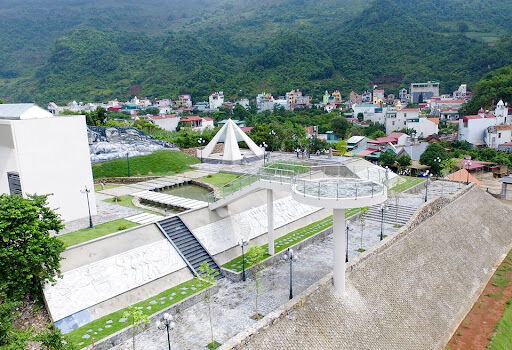
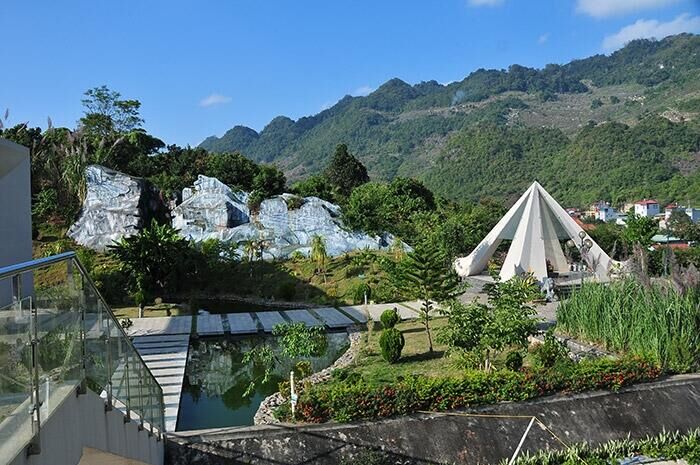
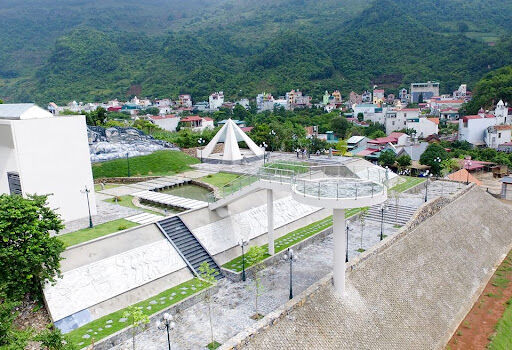
The site’s design was inspired by poet Quang Dũng’s iconic poem “Tây Tiến”—he himself was a soldier of the regiment. Covering an area of 5,000 m², the memorial complex includes seven main structures: the Traditional House, five relief sculptures, the Memorial Monument, the Tây Tiến Soldiers’ Honor Stele, the Memory Courtyard, and the Reflection Pavilion. Each structure tells a story, a memory, or a heroic chapter associated with the Tây Tiến Regiment.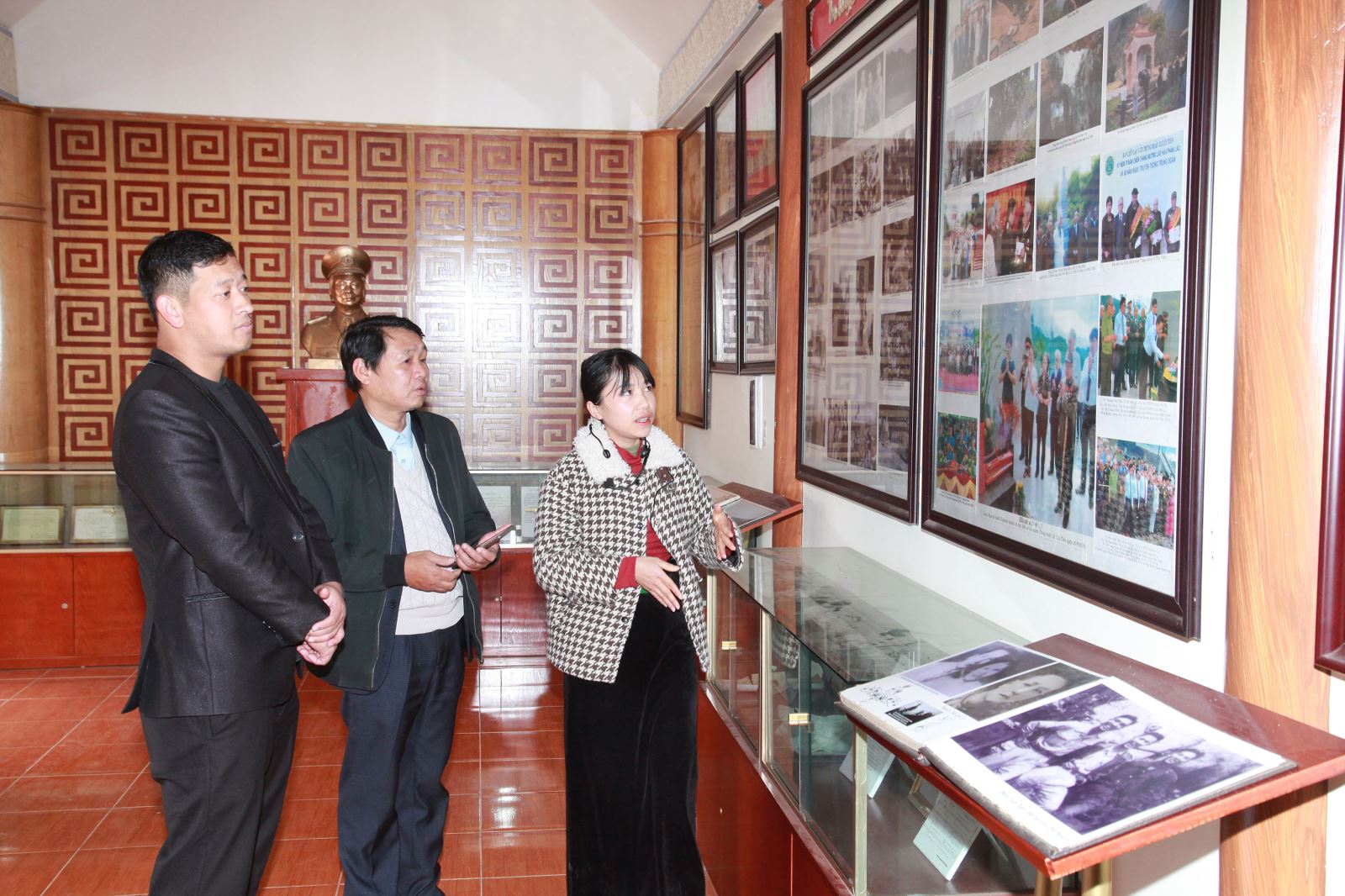
Visitors at the Exhibition House
The first stop for visitors is the Traditional House, designed in the style of a typical Northwest stilt house. The exhibition space is divided into three sections:
-
General Võ Nguyên Giáp Space
-
“Tây Tiến – Then and Forever” presenting images and artifacts of the Tây Tiến Regiment, such as lanterns, jackets, identification papers of poet Quang Dũng
-
“The Heroic and Artistic Tây Tiến”, recreating images of Tây Tiến soldiers during wartime, including artworks that have stood the test of time:
-
“Sheltering a Wounded Soldier” painting by artist Quang Thọ
-
Portrait of composer Doãn Quang Thái
-
Bust statue of poet Quang Dũng and his poem “Tây Tiến”
-
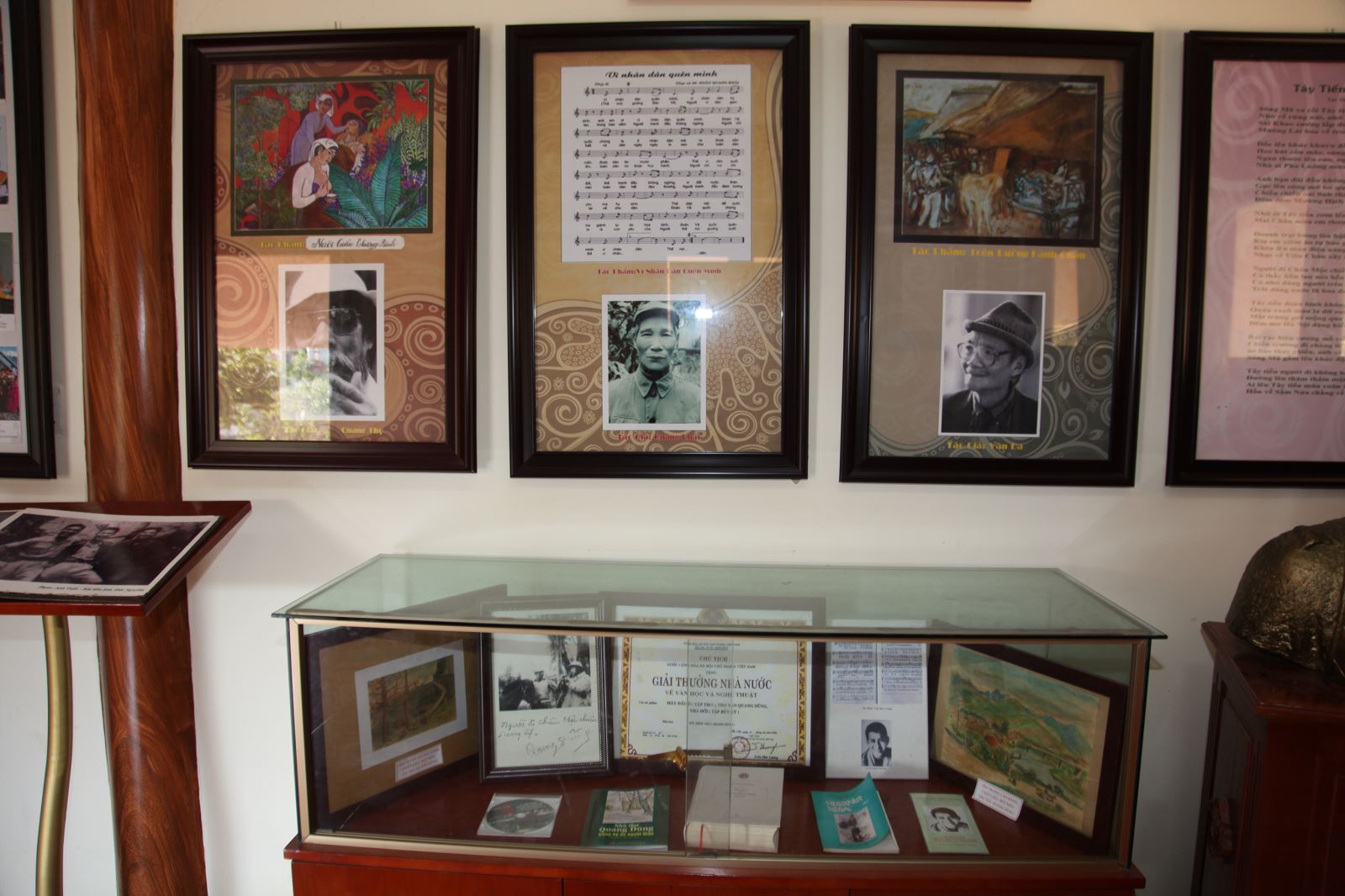
Artifacts Displayed Inside the Traditional House
Leaving the Traditional House, visitors walk up 52 stone steps, representing the number of the regiment. The steps vary in shape—some straight, some winding—to symbolize the regiment’s difficult marching routes with steep slopes and deep gorges.
Five large reliefs surrounding the complex depict touching stories of the Tây Tiến Regiment’s heroic feats.
At the highest point lies the Memorial Monument, designed in the shape of a bayonet cluster, symbolizing the regiment’s determination and fighting spirit. In front of the monument are two symbolic landmarks associated with the regiment’s journey:
-
That Luang Stupa – a cultural symbol gifted by the Lao people
-
Reed grass flowers – iconic imagery tied to the soldiers’ rugged marches, creating a poetic and mystical Northwest atmosphere.
Nearby stands the Honor Stele House, designed in the style of a “Triumphal Arch,” representing the regiment’s victories and aspirations for ultimate triumph.
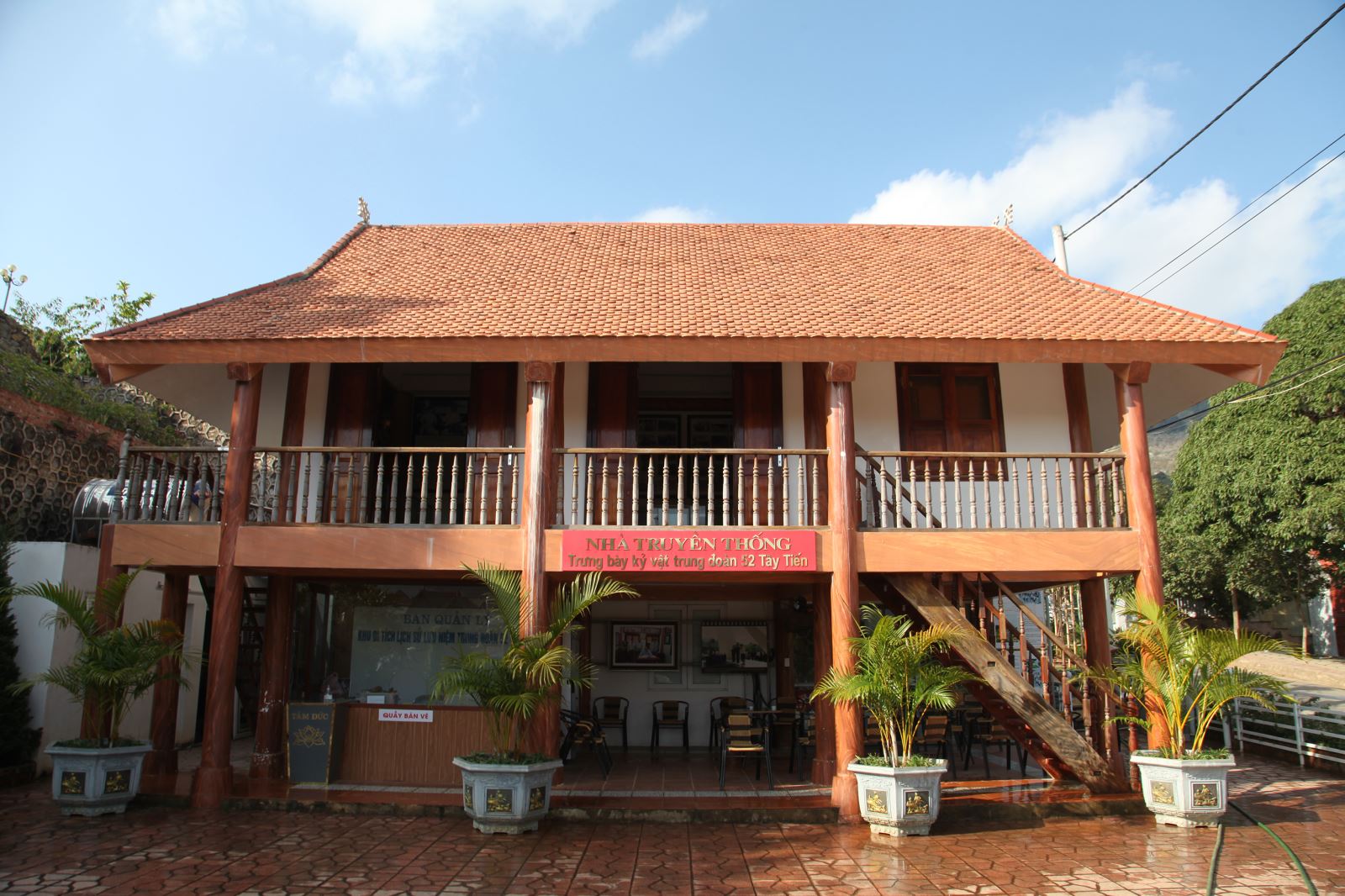
The Traditional House (Stilt Architecture)
In front of the Memorial Monument is the Memory Courtyard and Reflection Pavilion, uniquely designed with transparent glass walls that open up a panoramic view. From here, visitors can admire the dreamy, mysterious beauty of the Northwest mountains and the full scenery of Mộc Châu Town.
Standing at this high viewpoint, visitors often feel a profound sense of nostalgia for the Tây Tiến Regiment—for the brave and romantic young men of Hà Nội who willingly sacrificed their youth for the nation.
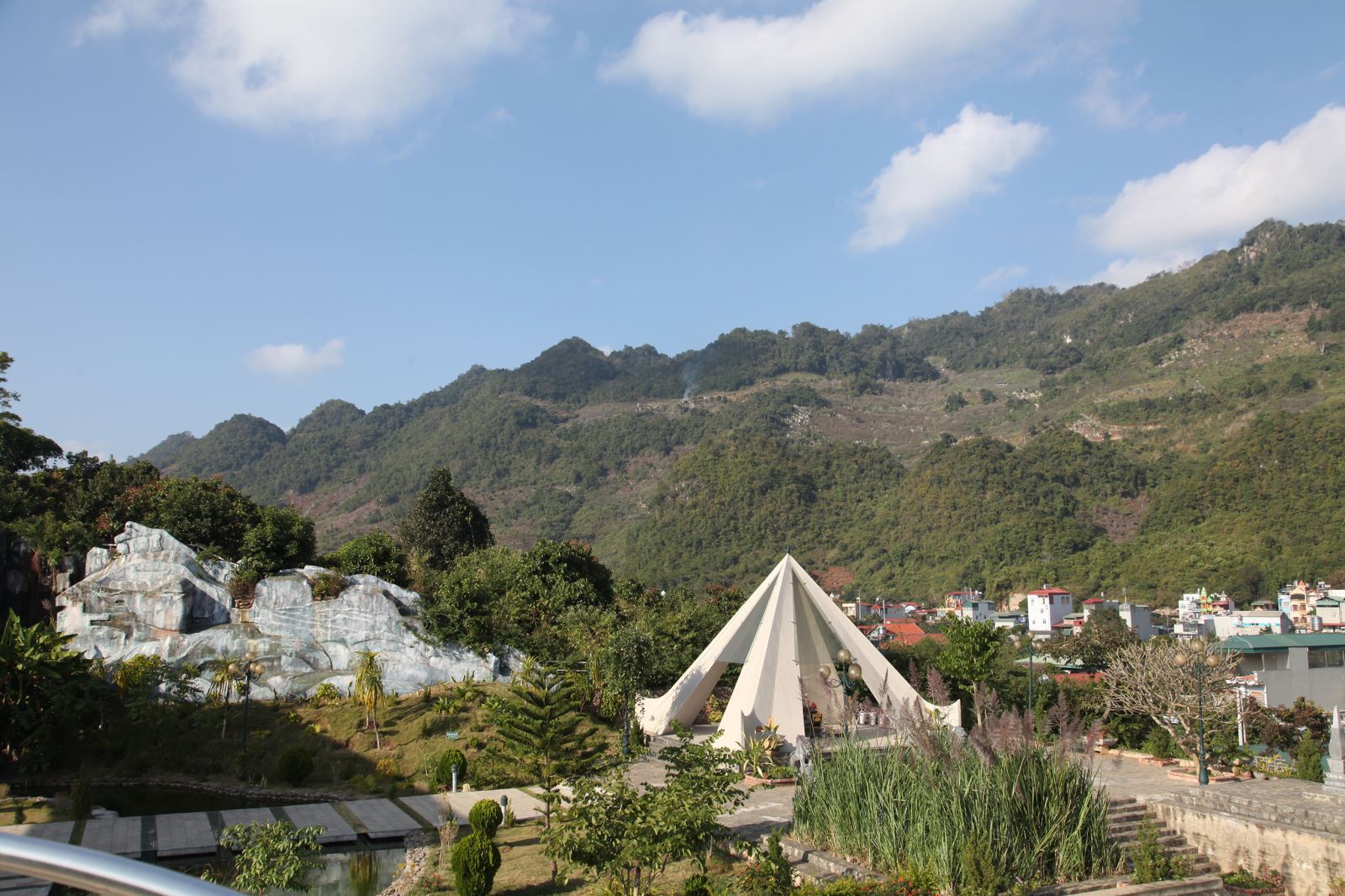
Panoramic View of the Memorial Site
According to Mr. Đinh Hồng Phúc, Deputy Director of Pha Luông Tourism Joint Stock Company—the unit managing the site—the National Historical Site – Memorial of the 52nd Tây Tiến Regiment preserves and introduces invaluable artifacts, images, and historical imprints of the regiment, consistently attracting great interest from visitors.
On average, the site welcomes over 30,000 visitors each year, serving as a “Red Address” for students, officials, and travelers to visit and learn.
He added:
“In the future, the site will continuously innovate, enhance research and artifact preservation, enrich the storytelling of Tây Tiến Regiment history, and improve the quality of tour interpretation and communications. We aim to strengthen collaboration with travel agencies to attract more visitors, establishing this memorial site as one of the most appealing destinations on the Mộc Châu Plateau.”

Feedback on service quality at this location